Vibe Science: AI and the Rise of Citizen Science
Four months ago, I didn't know what Nile Red was. I didn't know why you'd shine a blue light on a water filter. I knew nothing about fluorescence spectroscopy.
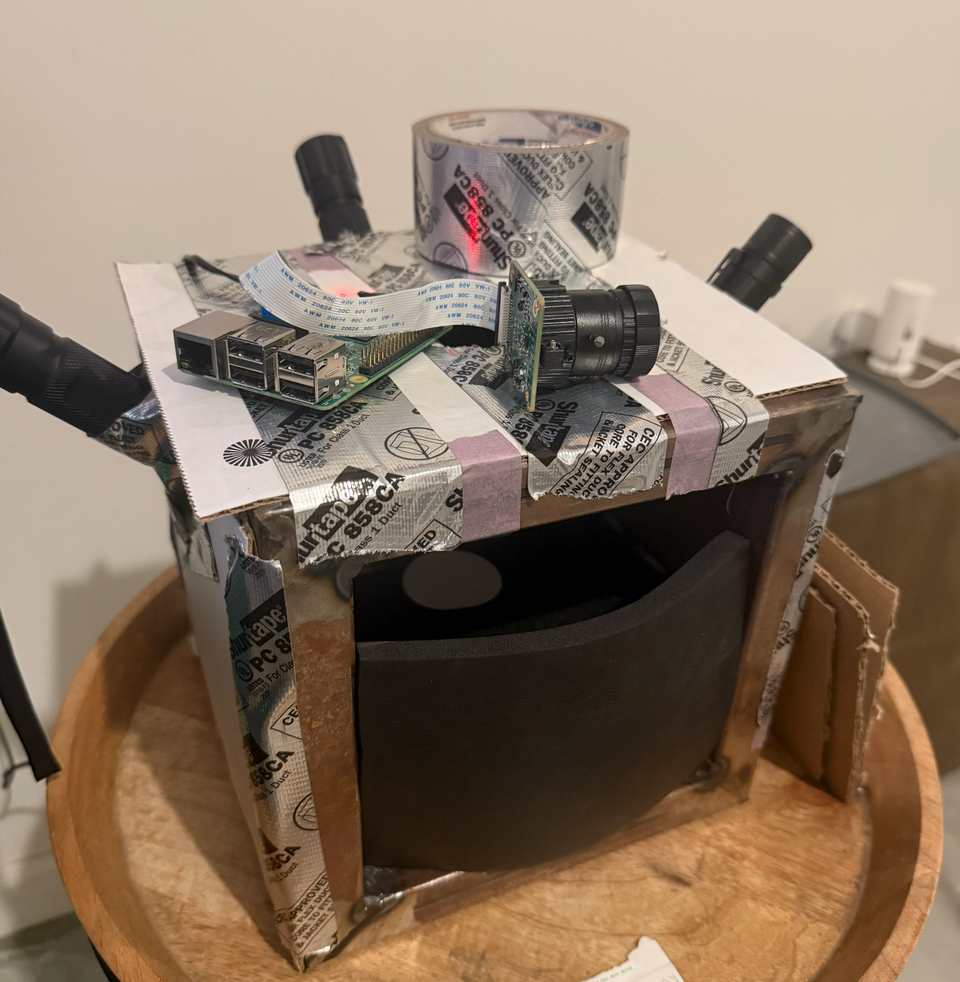
Now I have the world's first at-home microplastics water testing kit. Patent pending. And it might be the most useful thing I've ever built.
I'm calling it vibe science, and it's going to be a thing.
The rabbit hole
My wife is pregnant. She purged our house of plastics and charged me with testing our drinking water. The cheapest lab test I could find was $598. I thought, there's a LOT of fat in that price.
Pre-LLMs, I would've opened a paper titled "Smartphone-enabled rapid quantification of microplastics via Nile Red fluorescence staining" and closed it in 90 seconds. Too dense. Too far from my world.
AI changed that. I could drop twenty dense papers into a conversation and say "explain this like I'm a software engineer who knows nothing about chemistry." And it would. Not a dumbed-down summary — a real explanation I could build on. I'd cross-reference papers, ask what equipment I needed, buy it on Amazon, and run the test. The AI was wrong a lot, but the iteration loop felt familiar — it wasn't that different from debugging code before LLMs existed. Ask, try, fail, ask again. It took over a hundred attempts to get the process dialed in.
And then one night, two months in, I had particles glowing pink under blue light on a filter I'd prepared myself.
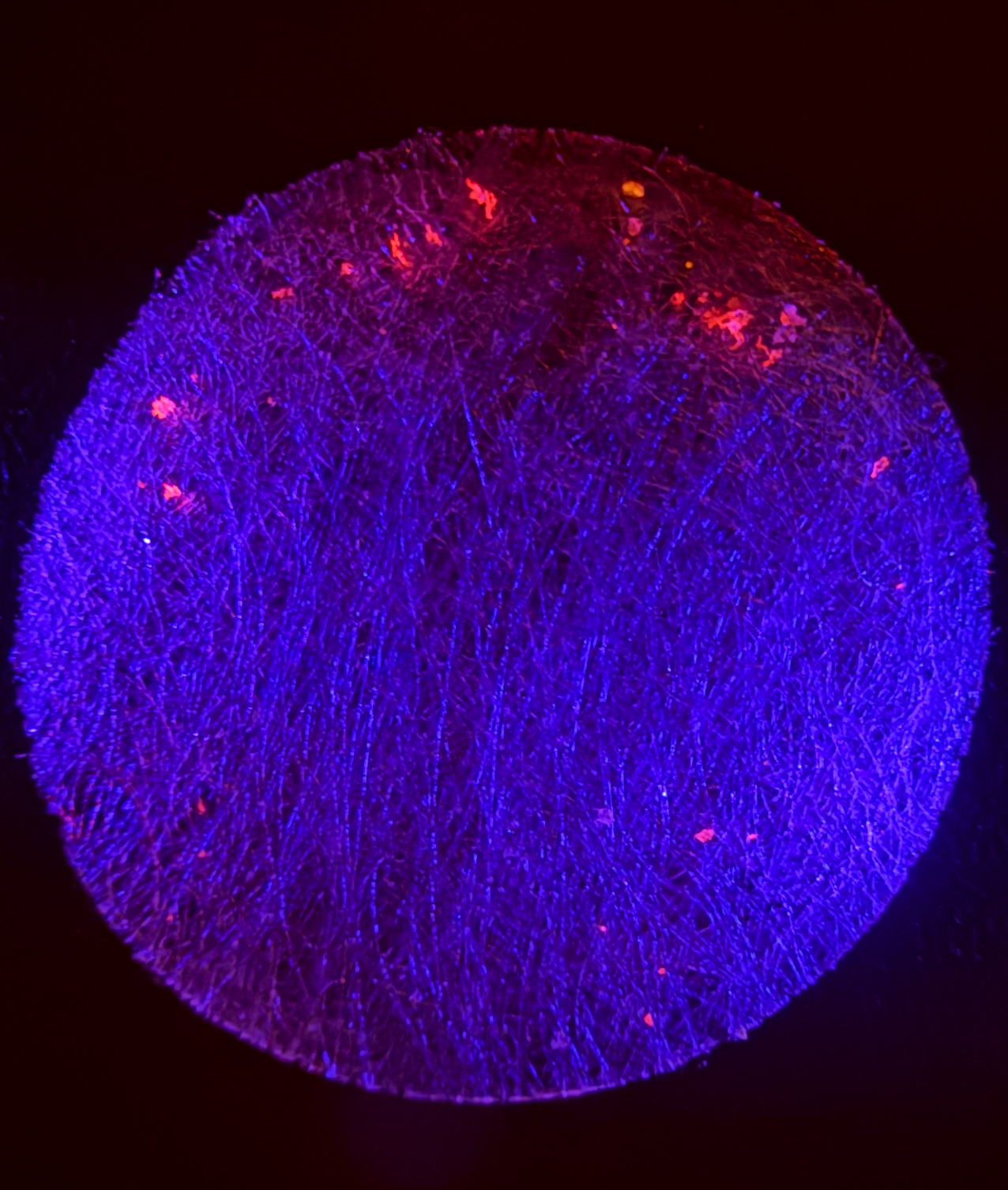
I just stood there staring at it. You know that feeling the first time you vibe coded an app and it actually worked? That disbelief — I made this? This is real? It was that, except I was looking at glowing microplastics on a membrane filter in my garage at 1am. I hadn't touched a beaker since high school. And it worked.
That was the moment I realized that code plus AI to translate unfamiliar domains meant the entire world of applied science was open to me. Robotics. Chemistry. Biology. I wasn't limited to software anymore. It felt like someone handed me a key to every building on campus.
How it actually happened
I drove around west LA collecting 50+ samples, and posted the results on Reddit. Got a bunch of views. Sold a few test kits to people who wanted to test their own water. Iterated on the process. Now we have an actual at-home kit — you filter your water, stain it with a fluorescent dye, photograph it with your phone, and we analyze the image. We can count particles and identify the type of plastic. PET, polyethylene, polystyrene, nylon.
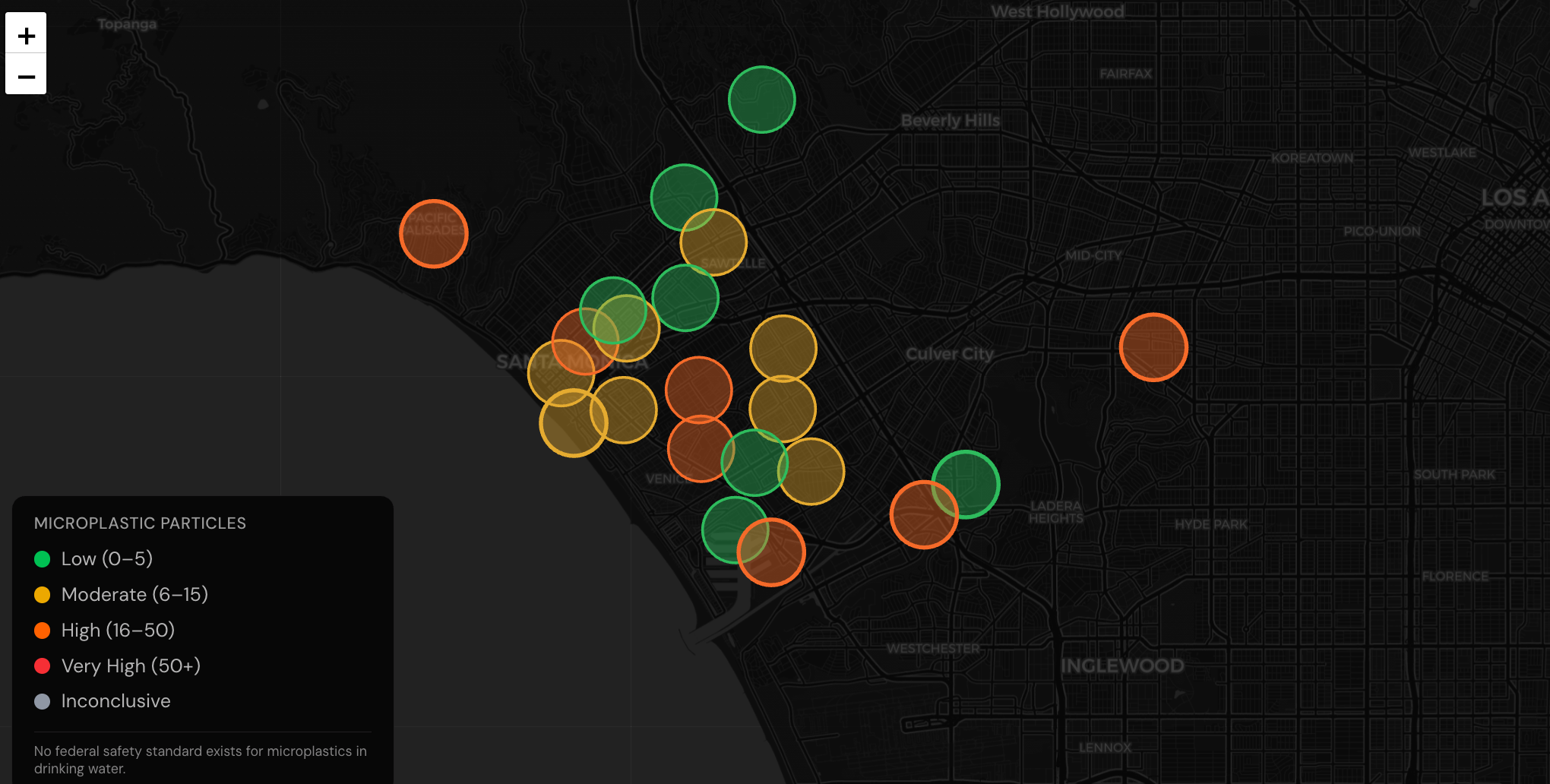
I've now tested tap water for microplastics in 20+ locations across West LA. Here's the contamination map.
by u/andrewpierno in LosAngeles
I didn't invent the method. Researchers at UCLA's Ozcan Lab published the science three years ago. What I did was read their papers with AI's help, understand the method, and figure out how to do it with cheap, off-the-shelf equipment instead of a $50,000 FTIR spectrometer.
All the data is public at thewatermap.com — every sample, every result, every method. If I can do this in my garage, the data should be open too.
Everyone is crossing the fence
Every software engineer I know is looking at hardware. 3D printing, sensors, Raspberry Pis. They've spent years making digital things and now they want to make something they can hold.
And every non-software person I know is looking at software. A friend of mine — fashion designer, knows nothing about code — built this beautifully designed dating experience. In-person, opinionated, dripping with taste. Something no engineer would come up with. I have no interest in competing with that guy. He's more dangerous than I am now.
The fences between disciplines are coming down. The limiting factor used to be technical skill. Now it's curiosity and taste.
The academic goldmine
Here's something people outside academia don't realize: academics get rewarded for publishing, not commercializing. A brilliant researcher can publish a method that could change an entire industry, and their incentive is to move on to the next paper. That means thousands of papers describing methods and discoveries that never leave the lab — not because the science is bad, but because there's no one to productize it.
That's the gap. The researchers did the hard part. Someone just needs to bring it to people. A software engineer with AI can read a paper on soil contamination, understand the chemistry, buy $300 in supplies, and build a consumer product. A biologist with AI can build the software. A designer with AI can make the interface beautiful. None of them need a PhD in the other person's field.
Citizen science used to mean birdwatching and rain gauges. Now it means shipping products built from academic papers and Alibaba.
The garage factory
The microplastics thing is just the beginning. Where I'm really headed is robotics and automation — building physical things end-to-end with AI. Design something, have machines manufacture it, ship it — all from a garage. That's what gets me out of bed. And it makes for great YouTube content, which doesn't hurt.
Think about where this goes. It's possible — maybe even likely — that someone discovers a novel treatment for a disease because they asked an LLM the right questions in the right order and ran the right experiments. Not in a $50 million lab. With low-cost, off-the-shelf gear. How incredible is that?
This is an incredible time to be alive. The papers are there. The equipment is cheap. The AI can translate the knowledge. The only thing left is you deciding to go build something weird.
And honestly — now tell me this isn't more interesting than another B2B SaaS idea that someone could vibe code themselves in a weekend. Maybe that's the other lesson here: if everyone can build software now, and you really want attention, you're gonna have to do more interesting shit.
We're just taking pre-orders now. Our first kits will ship in a few weeks.
All our data is public at thewatermap.com. Kit is at thewatertest.com.
Time to get weird baby!